

Anyone who has spent time on a construction site or near a chemical storage facility will be familiar with the distinct, brightly coloured squares tilted at forty-five degrees. These hazard diamonds are not just a decorative part of a health and safety checklist; they are a universal language of risk. In the high-pressure environment of a busy UK building project, the ability to glance at a vehicle or a container and immediately understand the nature of its contents is a critical skill for site managers and safety officers. When time is tight and the workforce is large, these colours provide the first line of defence against accidents. For general site awareness, a standard warning diamond hazard warning label can serve as a preliminary indicator of danger.
Understanding Hazard Diamond Colours is central to maintaining a compliant and safe site. These labels are governed by strict international and domestic standards, including the ADR regulations for the transport of dangerous goods and the Health and Safety (Safety Signs and Signals) Regulations 1996. The colour of the diamond tells you exactly what kind of threat you are dealing with before you even get close enough to read the text or the GHS symbols. Failing to recognise these colours can lead to incorrect storage, dangerous mixing of substances, and severe regulatory penalties during an HSE inspection. It is vital to correctly identify a dangerous substance hazard warning label to ensure safe handling protocols are followed.
The primary reason for the colour-coding system is speed of recognition. In an emergency, such as a spill or a fire, first responders and site staff do not have time to find a data sheet to understand the risk. The transport labels and workplace safety signs UK standards ensure that the visual cues are consistent across the country and throughout Europe. Each colour corresponds to a specific hazard class, ranging from explosives to corrosive liquids.
At Lasting Impressions, we have spent over two decades manufacturing high-quality safety signage that meets these exact standards, including compliance with ISO 7010 for international consistency. We understand that on a grit-covered site or in a damp warehouse, the vibrancy and durability of these colours are what make them effective. If a label fades or the red looks more like a dull pink, the safety chain is broken. This is why our hazard warning diamonds are designed for the toughest site conditions, ensuring they remain legible and compliant for the long term.
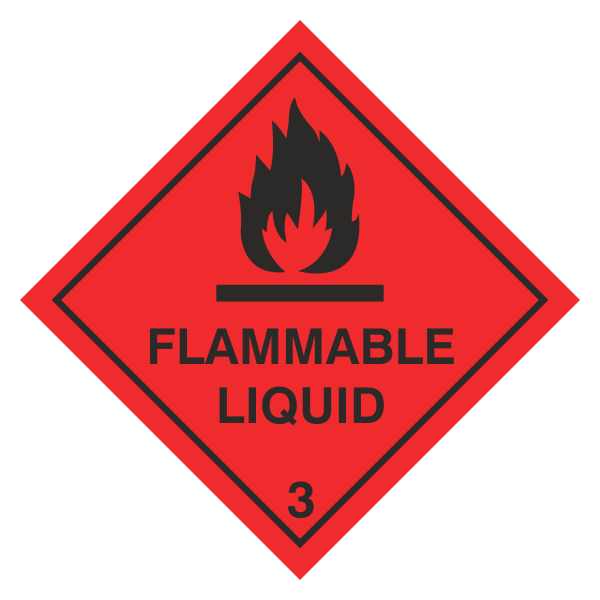
Red is perhaps the most recognisable colour in the hazchem labels system. It is used exclusively for substances that are prone to catching fire. This category is broad, covering everything from the fuel used in site machinery to the gases used for welding and cutting. When you see a red diamond, such as a flammable hazard warning label, the immediate priority is the control of ignition sources such as naked flames, sparks from grinding, or even static electricity.
The red label is used for several different types of flammable materials, including:
Liquids like petrol, diesel, and many solvents, often marked with a Flammable Liquid Hazard Warning Label.
Gases such as propane or butane, which require a specific Flammable Gas Hazard Warning Label, or a highly flammable LPG hazard warning label for liquid petroleum gas.
Solids that are easily ignited by friction or brief contact with an ignition source, denoted by a Flammable Solid Hazard Warning Label.
Storage areas for highly volatile substances, where a Highly Flammable Store Hazard Warning Label or a general highly flammable hazard warning label must be clearly visible.
Specialist environments requiring a flashpoint below 32f hazard warning label for extremely low-temperature ignition risks.
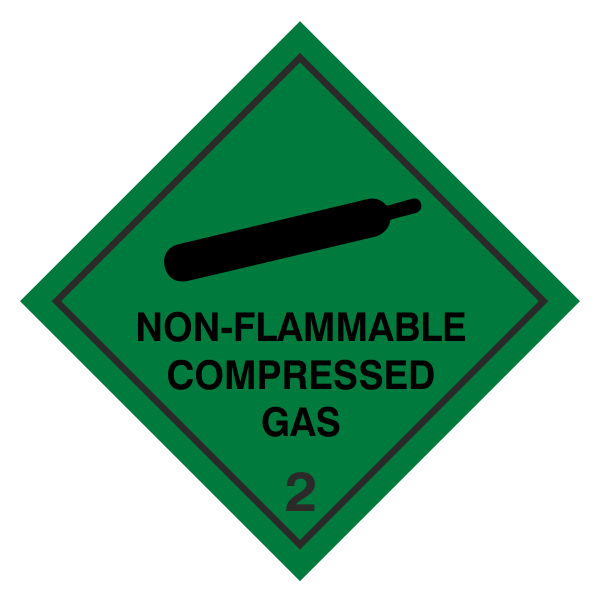
While red alerts you to fire, green and yellow serve very different but equally vital purposes. Green is often associated with safety, but in the world of dangerous goods placards, it indicates a compressed gas that is non-flammable. This might sound less dangerous, but compressed gas cylinders carry significant physical risks due to the high pressure inside them. A cylinder that is dropped or exposed to heat can become a projectile, regardless of whether the gas inside burns. Using a compressed gas hazard warning label helps workers identify these physical risks quickly.
Yellow, on the other hand, is the colour of oxidising agents. These are substances that do not necessarily burn themselves but provide the oxygen needed for other materials to burn fiercely. If you store an oxidizing agent hazard warning label next to flammable liquids, you are creating a potential disaster. Recognising a yellow diamond is the first step in proper segregation and storage on site.
For many UK contractors, green labels are most frequently seen on oxygen cylinders or inert gases used in HVAC maintenance. You will often see a Non-Flammable Compressed Gas Hazard Warning Label on these canisters. Because we keep such extensive stock of these items at our South West facility, we can often provide next day delivery for those needing to replace damaged or weathered labels on their equipment.
Yellow labels are essential when handling chemicals used in water treatment, bleaching, or certain types of industrial cleaning. Certain materials may also require a spontaneously combustible hazard warning label if they are prone to self-heating. The most common varieties include:
The standard Oxidizer Hazard Warning Label for general oxidising substances.
Specialist Organic Peroxide Hazard Warning Label for highly reactive chemicals.
Specific Oxygen Hazard Warning Label used for pure oxygen storage.
White is used as a background for several distinct hazard classes, most notably toxic and infectious substances. When a site manager sees a white diamond with a skull and crossbones, it indicates a poison risk. This requires immediate attention to Personal Protective Equipment (PPE) and strict hygiene protocols. A Toxic Hazard Warning Label is a signal that accidental ingestion, inhalation, or skin contact could be fatal. In cases where gases are involved, a toxic gas hazard warning label, a poison hazard warning label, or a poison gas hazard warning label must be used.
However, white is also used in combination with other colours. For instance, a half-white and half-black diamond signifies a Corrosive Hazard Warning Label, which indicates substances that can dissolve skin or metal. This mix of colours helps to differentiate between a substance that poisons you from the inside and one that burns you on contact. For less severe risks, a harmful hazard warning label may be appropriate.
Beyond the primary solid colours, you will encounter diamonds that use patterns or specific colour splits to indicate more complex risks. These are often the most critical site safety symbols to get right because the substances they represent are highly regulated. Examples include:
Blue diamonds, which warn of materials that are Dangerous When Wet Hazard Warning Label, reacting violently with water to produce flammable or toxic gases.
Yellow and white splits for radioactive materials, including the radioactive hazard warning label, radioactive ii hazard warning label, and radioactive iii hazard warning label.
Biohazard risks identified by a bio hazard hazard warning label or an infectious substance hazard warning label, sometimes accompanied by an infectious substance in case of damage hazard warning label for transport.
Explosive materials, which range from a general explosive hazard warning label to specific divisions like explosive 1.1f, explosive 1.1g, explosive 1.2b, explosive 1.2d, explosive 1.2e, explosive 1.2g, explosive 1.3c, or explosive 1.3g hazard warning label.
Transport markers for smaller quantities, such as an lq hazard warning label, an lq un hazard warning label, or a limited quantity hazard warning label.
Knowing what the colours mean is only half the battle. The other half is ensuring that your site actually displays the correct Hazard Warning Diamonds in the right places. Under the ADR regulations, vehicles carrying dangerous goods must be clearly marked on all sides. Within the workplace, the Health and Safety at Work Act 1974 places the responsibility on the employer to ensure that all risks are clearly communicated to anyone who might be exposed to them.
This is where hazard warning signs and Workplace Safety Signs become indispensable. It is common for labels to become unreadable due to UV exposure, chemical splashes, or mechanical wear. Regularly auditing your signage and replacing any damaged Hazchem Labels is a simple way to stay on the right side of the law and protect your team.
If you find that a standard label does not quite fit your specific container or storage unit, you can design your sign today to meet those unique requirements without compromising on regulatory accuracy. For those managing complex projects, keeping a range of common labels in stock ensures that when a new shipment of materials arrives, the correct General Hazard Warning Label or specific Irritant Hazard Warning Label can be applied immediately.
If you are unsure about which specific label your site requires, our team is always available to provide expert guidance on EN ISO 7010 standards and British safety requirements. You can easily contact us for technical support or to discuss bulk orders for your next project. Effective safety starts with clarity; by ensuring every member of your team understands these colours, you create a culture of awareness that goes beyond mere compliance.